Why AC Capacitors Fail After Storms (And What To Do Next)
AC stopped working after a storm? Learn why capacitors fail, warning signs to watch for, and when it’s safest to call a professional instead of DIY.
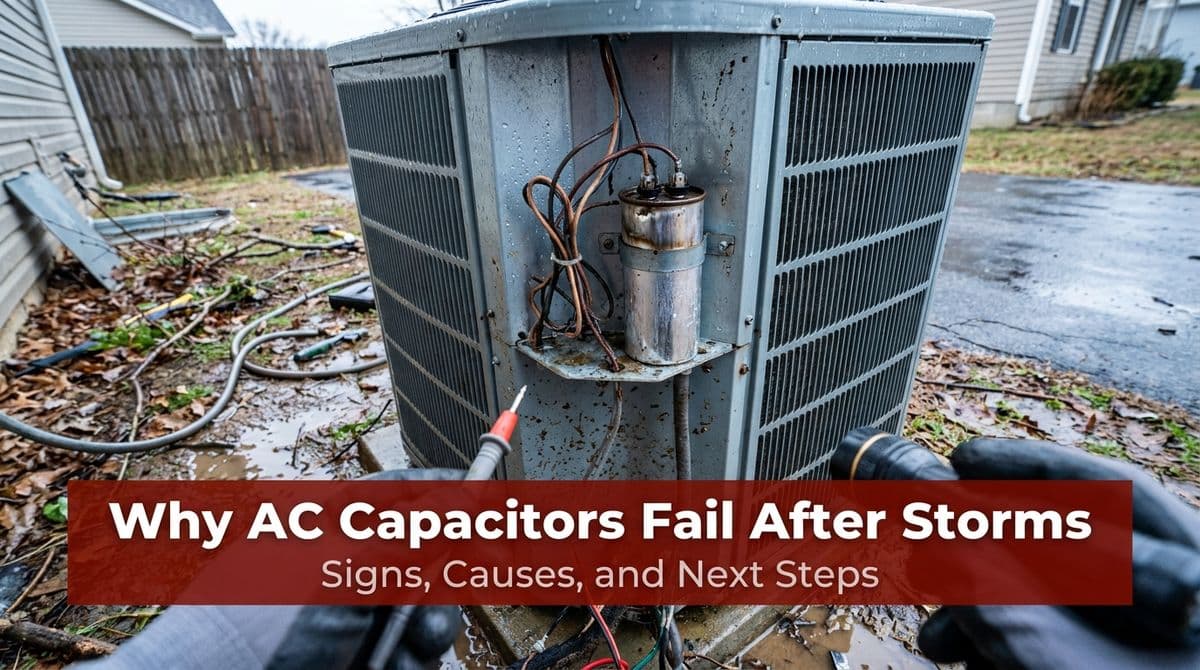
A Stormy Afternoon and a Silent AC
We recently got a call from a customer — let’s call him Mike — right after a line of afternoon storms rolled through. Mike’s house had gone from cool and comfortable to hot and stuffy in what felt like minutes.
When our receptionist picked up, the first thing she asked was, “Is it working at all? Is it blowing?” Mike’s answer was a frustrated, “No. No.” Based on that and the timing right after a storm, we had a pretty strong hunch: this sounded like a failed AC capacitor.
We see this all the time, especially during storm season. If your air conditioner suddenly shuts down after thunder, lightning, and power flickers, there’s a good chance your capacitor took the hit. Let’s walk through why that happens, what signs to look for, and when it’s time to call a professional instead of trying to DIY it.
What Your AC Capacitor Actually Does
The capacitor is a small but critical electrical component in your AC system. Think of it as the “kickstarter” and “stabilizer” for your motors.
Your system typically has one or more capacitors that:
- Store and release energy to help the compressor and fan motors start
- Keep those motors running smoothly once they’re up and going
- Handle high voltage in short bursts every time your AC cycles on
Because capacitors deal with electrical surges and high voltage, they’re already under stress on a good day. Add storms and power issues into the mix, and they’re often the first part to fail.
Why Capacitors Fail After Storms
When Mike called, he mentioned the AC had been fine until after some rough weather. That’s exactly when we expect to see capacitor problems. Here’s why storms are so hard on them:
- Power surges and voltage spikes: Lightning strikes and utility hiccups can send a quick jolt through your home’s electrical system. Capacitors are especially sensitive to these spikes.
- Frequent power flickers: If your lights dim, flicker, or the power cuts in and out, your AC may try to start and stop repeatedly. Each start-up is hard on the capacitor.
- Brownouts (low voltage): During heavy demand (like hot, stormy afternoons), voltage can sag. Motors struggle to start, forcing the capacitor to work overtime.
- Age and heat: Older capacitors that have been baking in a hot outdoor unit for years are already weakened. A single storm surge can be the final straw.
That’s why, as we told Mike, “It seems to be the thing that goes all the time — especially with the storms we have.” Around here, storm season and capacitor calls go hand in hand.
Common Signs Your Capacitor May Have Failed
When we schedule a visit, we always ask a few quick questions to narrow things down, just like we did with Mike. Here are some signs that point to a bad capacitor:
- Indoor air handler blowing, but no cool air and the outside unit is silent
- Outdoor fan not spinning even though you hear a humming or buzzing sound at the unit
- AC tries to start, then clicks off repeatedly
- Breaker tripping when the AC attempts to come on
- Unit was fine before a storm, then suddenly stopped working afterward
In some cases, if you’re standing near the outdoor unit when it tries to start, you may hear a humming motor that just can’t get going. That’s a classic “help me” cry from a motor with a bad capacitor.
Why Capacitor Replacement Isn’t a DIY Job
We understand the temptation to hop online, order a capacitor, and swap it out yourself. It’s a small part — how hard can it be, right? The reality is, capacitors can be dangerous if you’re not trained.
Here’s what we explain to homeowners like Mike:
- Stored energy: Even with the power off, a capacitor can hold a dangerous electrical charge.
- Correct sizing matters: The microfarad (µF) rating and voltage must match your system. A “close enough” capacitor can damage your compressor or fan motor.
- Wiring errors: Miswiring a capacitor can cause shorts, tripped breakers, or permanent damage to expensive components.
- Warranty concerns: DIY electrical work can void warranties on newer systems.
When we come out on a service call, like the one we scheduled for Mike, we don’t just swap the part and leave. We test the capacitor under load, inspect the wiring, check the contactor, and look over the entire system so you have a clear picture of your AC’s health.
When to Call a Professional (And What You Can Safely Do)
After a storm, here’s what you can safely check before you pick up the phone:
- Make sure the thermostat is set to “cool” and below the room temperature.
- Verify that the breaker for the AC in your electrical panel is on.
- Check the outdoor disconnect (usually a small box near the unit) to ensure it hasn’t been pulled.
- Listen at the outdoor unit: is it completely silent, or do you hear a hum?
If everything above looks normal but:
- The outdoor unit won’t start
- You hear humming but no fan
- The system died right after a storm
— it’s time to call a professional. Describe exactly what you’re seeing and hearing, and mention if it followed a storm or power flicker. That helps us, like it did with Mike, narrow down the likely cause and come prepared.
How to Protect Your AC From Future Storm Damage
You can’t control the weather, but you can reduce storm-related damage to your AC:
- Consider a whole-home surge protector to help shield major appliances, including your AC.
- Have regular maintenance done so weak capacitors and connections are caught before storm season.
- Turn off the system at the thermostat during severe lightning if you experience repeated power flickers.
- Keep the outdoor unit clean and clear of debris so it can cool properly and avoid extra strain.
If your AC suddenly quits after a storm and you suspect a capacitor issue, don’t panic—and don’t feel like you have to diagnose it alone. Give us a call, and we’ll come out, go over the whole system, and make sure you have a clear, honest picture of what’s going on and what it will take to get your home comfortable again.