Using Another HVAC Company for Warranty Repairs
Wondering if you must use the original HVAC installer for AC warranty repairs? Learn how warranties work, what fuses and power issues affect AC, and how to choose a provider.
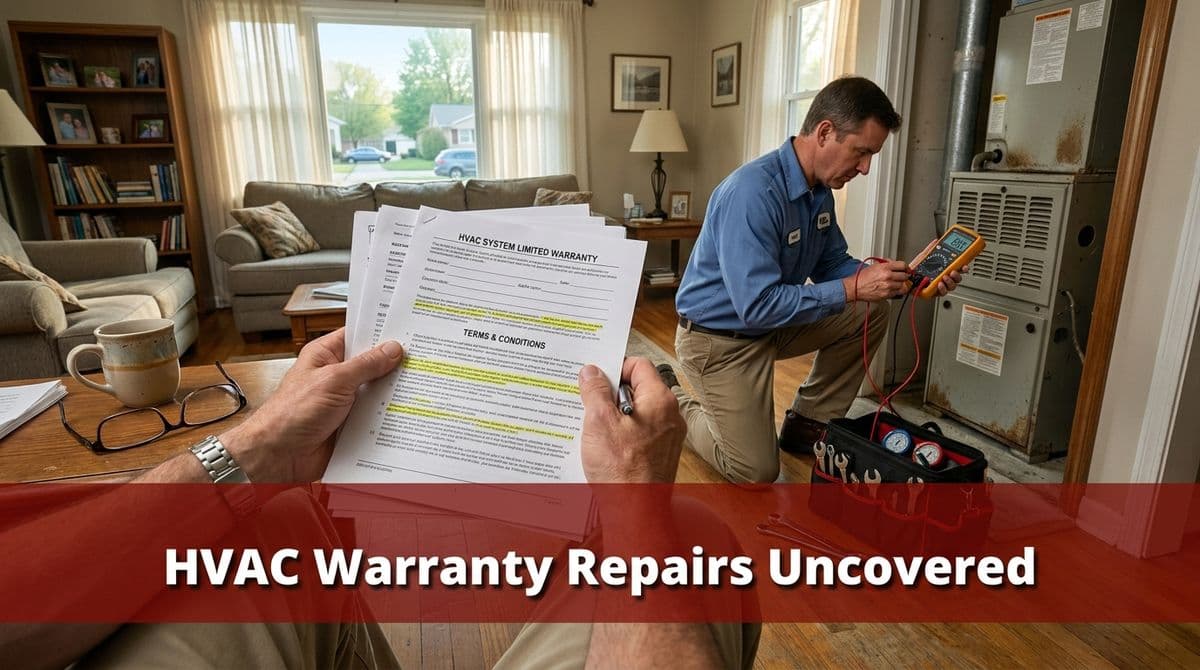
“Do I Have to Call the Original Installer?” A Real Homeowner’s Question
We recently got a call from a homeowner — let’s call her Linda — who was hot, frustrated, and more than a little confused about her AC warranty.
Linda’s air conditioner had stopped blowing cold air. The condensate pump was running and pumping water out, but there was no air coming out of the vents at all. She told us they’d had a similar issue before that turned out to be a blown fuse. This time, her husband suspected the same thing.
Here was the problem: the compressor and some major parts on her system were still under warranty, but she did not want to call the original company that installed the unit. They had changed ownership, and the last technician who came out made her and her husband very uncomfortable — and clearly didn’t seem focused or professional in their home.
Her big question to us was simple:
“Can you handle the warranty even though you didn’t install the system?”
Yes, You Can Usually Use a Different Company for Warranty Repairs
In most cases, the answer is yes — you do not have to use the original installer to get warranty repairs done.
Here’s how we explained it to Linda, and how it typically works for most homeowners:
- Manufacturer warranties (on compressors, coils, etc.) are tied to the equipment and its installation date, not to a specific contractor.
- Any licensed HVAC contractor who works with that brand can usually process warranty parts.
- We simply record your model and serial numbers, check your installation date, and verify your warranty coverage with the manufacturer.
- If a covered part has failed, we can order and install the warranty part on your behalf.
The original installer does not own your warranty. They may have been the one to register it, but the coverage is provided by the manufacturer.
Exceptions: When You Might Be Tied to One Company
There are a few situations where your options can be more limited:
- Labor warranties from the installer
If the original contractor gave you a separate labor warranty (for example, “10-year parts and labor”), that labor portion is often only valid with that company. Another contractor can still do the work, but their labor may not be covered under that installer’s warranty. - Extended warranty contracts
If you bought an extended warranty or service plan from a specific dealer or home warranty company, the contract may require you to use their network of providers. - Brand-specific dealer programs
Some premium brands prefer you to use an “authorized” dealer for certain extended coverages, but even then, you often have more than one authorized dealer in your area.
For most standard manufacturer equipment warranties, though, you are free to choose a reputable, licensed HVAC provider you trust.
What We Do on a Warranty Service Call
When Linda booked her appointment, we let her know we could be out the next day. Here’s what we told her we’d do — and what you can expect if you call us or another solid HVAC company for a similar situation:
- Basic diagnosis – We start by checking power, fuses, breakers, and control boards to see why the system isn’t running or blowing air.
- Check refrigerant pressures – As we told Linda, we’ll check the system pressures and make sure the refrigerant level looks right.
- Inspect major components – We look at the compressor, fan motors, capacitors, contactors, and safety devices.
- Verify warranty – We record your model and serial numbers and verify warranty coverage with the manufacturer.
- Explain what’s covered – We tell you which parts appear to be under warranty and what costs you may still be responsible for (like labor, refrigerant, or non-covered parts).
If it turns out to be a simple blown fuse or loose wire, the repair might not involve the warranty at all — but we still document everything so you know exactly what was done.
Fuses, Power Issues, and Why Your AC Suddenly Quits
Linda’s husband suspected that a fuse had blown again. That’s a common culprit when a system suddenly stops working, especially if:
- Your power tends to flicker or go out during storms.
- You’ve recently had electrical work or panel changes.
- The outdoor unit tries to start and then shuts off immediately.
Homeowners sometimes notice power “blips” that aren’t long enough to reset clocks but are still hard on HVAC equipment. Repeated surges can stress fuses, capacitors, and other electrical components.
Important: Fuses and high-voltage electrical components in your AC system are not a safe DIY project. Always shut off power at the disconnect and breaker, and when in doubt, let a licensed technician handle it.
Simple checks you can safely do before you call
- Make sure the thermostat is set to “Cool” and the temperature is lower than the room temp.
- Check the air filter; a severely clogged filter can cause problems.
- Verify the breaker for your AC and air handler/furnace isn’t tripped.
- Look at the outdoor disconnect box (usually near the condenser) and see if any obvious on/off handle has been pulled (don’t open anything that exposes wiring).
If all that looks normal and you still have no air or no cooling, it’s time for a service call.
How to Choose the Right HVAC Company for Warranty Work
Linda’s biggest concern wasn’t just that her AC was down — it was that she felt unsafe and uncomfortable with the previous company’s technicians in her home. That is reason enough to look elsewhere.
When you’re choosing a company to handle warranty repairs, here are a few things to look for:
- Licensing and insurance – Make sure they’re properly licensed and insured in your state.
- Clear warranty experience – Ask, “Can you look up and process manufacturer warranty parts for my brand?” They should be able to explain the process clearly.
- Professional behavior – Techs should arrive sober, respectful, and focused. No excuses.
- Upfront pricing – You should get a clear explanation of what the warranty covers and what you’ll pay out of pocket before work is done.
- Good communication – Confirm appointment windows, get a call or text when the tech is on the way, and expect a straightforward explanation of the diagnosis.
Bottom Line: Your Warranty, Your Home, Your Choice
At the end of our call, Linda was relieved to hear she wasn’t trapped with a company she didn’t trust. We scheduled her for the next afternoon, with the understanding that if something earlier opened up, we’d let her know and call ahead.
If you’re in the same boat — AC not working, parts still under warranty, but you’re uncomfortable with the original installer — you’re usually free to choose a different licensed HVAC company to handle the work and process the warranty parts.
Your home comfort and peace of mind matter as much as the equipment itself. Don’t be afraid to insist on both.