Why Your Newer AC Suddenly Stops Working
Newer AC suddenly not cooling? Learn the most common causes, safe DIY checks, and why turning it off before your technician arrives can speed up the repair.
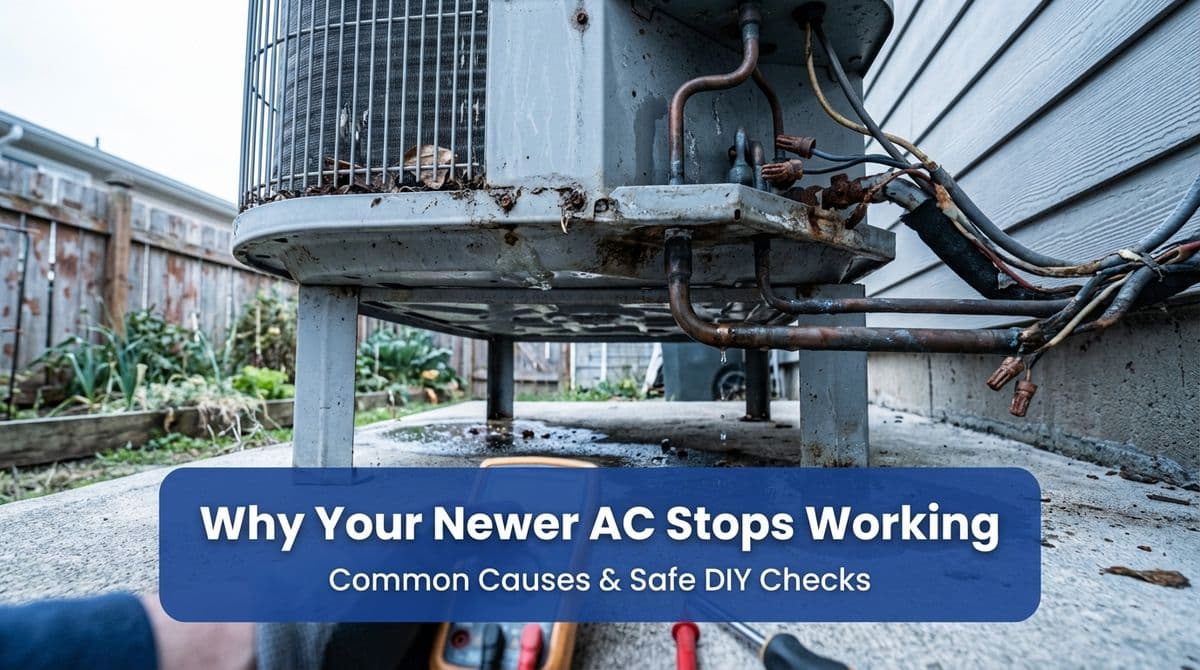
Why A Newer AC Can Suddenly Stop Working
We recently got a call from a homeowner — let’s call him Alex — whose upstairs was sitting at 80 degrees in a home built in late 2022. Brand-new house, relatively new AC, and yet: no cooling, no air movement he could feel, and no idea what was going on.
By the time Alex called us, it was already later in the day and our technicians were fully booked, so we scheduled him for the next morning. Before we hung up, though, we walked him through a few key questions and gave one important instruction: turn the AC completely off overnight.
If you’ve got a newer air conditioner that suddenly stops working, Alex’s situation might sound very familiar. Here’s what could be going on, what you can safely check yourself, and why shutting the system down can actually help us fix it faster.
“Nothing Is Coming On — Is That Normal For A New System?”
One of the first things we ask, just like we did with Alex, is:
- Is anything coming on at all? Do you hear the indoor blower or outdoor unit?
- Is any air blowing from the vents? Even room-temperature air?
- Is the thermostat display lit? Any error messages?
Even on a newer system, several common issues can cause a complete shutdown:
- Tripped breaker or safety switch from a power surge or short
- Frozen evaporator coil that forces the system to stop cooling
- Thermostat or low-voltage control issue
- Drain safety float switch tripped by a clogged condensate line
A new AC isn’t immune to problems. In fact, new builds sometimes have installation or drainage quirks that don’t show up until the first hot season.
What To Check First Before Your Technician Arrives
There are a few simple, safe checks you can do before we get there. These won’t replace a full diagnostic, but they can occasionally restore cooling or at least give us clues.
1. Check The Thermostat
- Make sure it’s set to Cool, not Off or Heat.
- Set the temperature at least 3–5 degrees below the current room temp.
- Confirm the fan is on Auto, not Off.
- If it’s battery-powered, try fresh batteries.
If the thermostat screen is blank even after new batteries, there may be a power or control issue that needs a pro.
2. Check Your Breakers (Carefully)
- Locate your electrical panel.
- Look for breakers labeled AC, Air Handler, or HVAC.
- If one is tripped, turn it fully to OFF and then back to ON once.
If a breaker instantly trips again, stop there and give us a call. Repeatedly resetting a breaker can be dangerous and may damage the equipment.
3. Check Your Air Filter
A severely clogged filter can restrict airflow and, over time, lead to freezing.
- Locate the filter (usually at the return grille or in the air handler).
- If it’s dirty or caked with dust, replace it.
- Do not run the system without a filter.
4. Look For Water Around The Indoor Unit
Many newer systems include a float safety switch that shuts the system off when the drain line clogs and the pan fills with water.
- If you see standing water near your indoor unit or overflow pan, that’s a red flag.
- In that case, leave the system off until we can safely clear the drain and check for damage.
Why We Often Ask You To Turn The AC Completely Off
When we scheduled Alex’s visit, we asked him to switch the thermostat to Off and leave it that way until morning. That’s not just to “rest” the system — it’s to help us get an accurate diagnosis.
Frozen Coils: A Hidden Problem On New Systems
Even with newer equipment, a combination of restricted airflow, low refrigerant, or drainage problems can cause the indoor coil to freeze. You don’t always see the ice unless you open panels, but the symptoms are familiar:
- Little or no air from vents
- System runs but doesn’t cool well
- Eventually, the system may shut down completely
If we arrive while everything is still iced over, our gauges and sensors can’t read the system correctly. That can delay the repair or even hide the real problem.
By turning the system fully off for several hours, you let that ice melt so we can see real operating pressures, temperatures, and airflow.
Safety Reasons To Keep It Off
There’s also a safety and equipment-protection side:
- Running a frozen system can stress the compressor and fans.
- If there’s an electrical or short-cycling issue, forcing it to run can do more damage.
- If a drain is clogged, continuing to run it can overflow water into ceilings or walls.
So when we tell you, just like we told Alex, “If it’s not working, go ahead and turn it all the way off until we get there,” we’re trying to protect both your system and your home.
When To Call Right Away (Even With A New AC)
After you’ve done the basic checks above, it’s time to call a professional if:
- Nothing comes on at all and breakers are not tripped
- The thermostat is powered but the system won’t respond
- You see or suspect ice on the lines or unit
- You notice water leaks around the indoor unit
- There are burning smells or unusual noises
Newer systems like Alex’s still need expert diagnostics. The good news is that many issues are repairable, and if your system is under warranty, some parts may be covered — you’ll usually just pay for labor and any non-warranty items.
Bottom Line: Power Down, Then Let Us Take It From There
If your relatively new AC suddenly stops working, don’t panic and don’t keep forcing it to run. Check the basics — thermostat, breakers, filter, and signs of water — then shut the system off and schedule a service call.
That simple step helped us give Alex a faster, more accurate diagnosis, and it can do the same for you. Once everything is safely off, we can come out, properly test the system, explain exactly what’s going on, and help you decide the best repair option for your home.