Home Too Cold Even With the Thermostat Set Higher?
Home feels too cold even with the thermostat set higher? Learn common thermostat issues, simple DIY checks, and when to call an HVAC pro to fix your comfort.
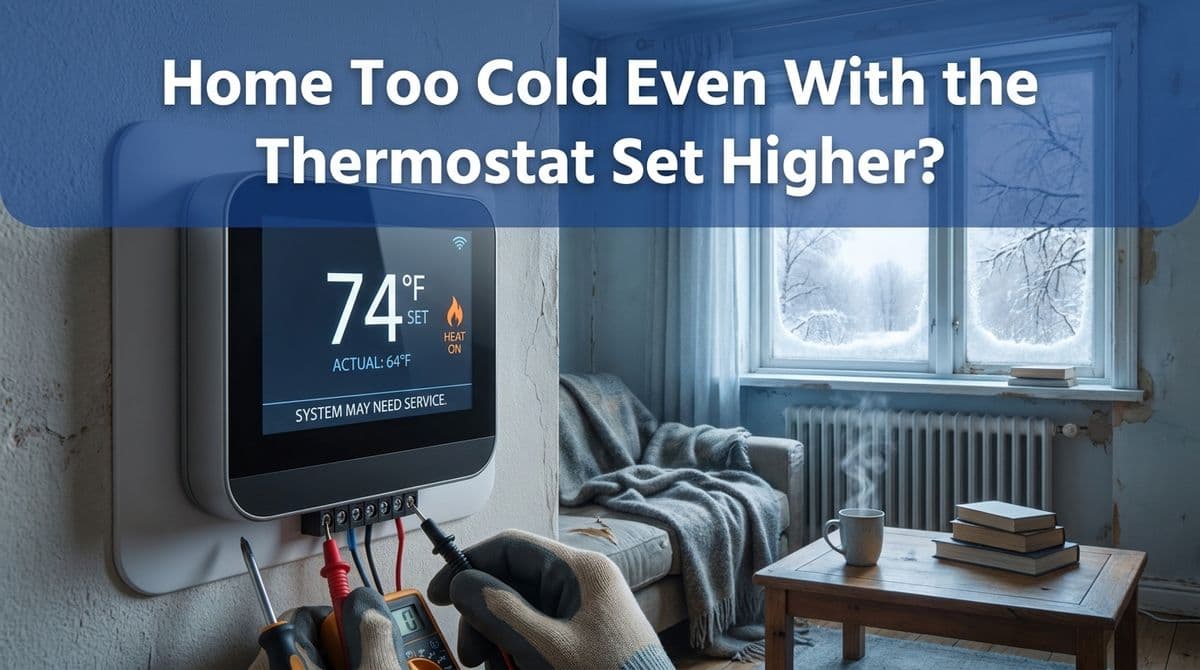
Why Your Home Feels Too Cold When the Thermostat Is Set Higher
We recently got a call from a customer — let’s call him Tom — who was more worried about freezing his cats than anything else.
We had just installed a new thermostat for him. Tom told us, “I wanted it to stay at 77, but I’ve got it set at 80… then 81… and it still gets freezing. I keep going up and down between 80 and 81, but it never feels like 80 or 81 in here.”
In other words, his home felt way colder than the thermostat setting. The system was running, the air was cold, but the temperature in the rooms just didn’t match what he saw on the screen. If that sounds familiar, you’re not alone.
When the Thermostat Setting Doesn’t Match How Your Home Feels
In Tom’s case, his AC was “working too well” — the house felt like an icebox even with the thermostat set higher than normal. Other homeowners call us with the opposite problem: the thermostat is set to a comfortable temperature, but the house never seems to get there.
Both of these situations usually point to a thermostat or thermostat-related issue, not necessarily a broken air conditioner or furnace. Here are some of the most common reasons your home doesn’t feel like the temperature you’ve set.
1. Thermostat Location Is Throwing Things Off
The thermostat can only control based on what it “sees” right where it’s mounted. If it’s in a bad spot, the rest of the home can end up too cold or too warm while the thermostat thinks everything is perfect.
Problem locations include:
- Right in direct sunlight – The thermostat warms up and thinks the house is hotter than it really is, so it keeps overcooling.
- Near a supply vent – If a cold air vent blows right on the thermostat, it may think the house is already cold and shut off too early or cycle oddly.
- In a hallway no one uses – The hallway might be fine while the living room and bedrooms are uncomfortable.
In Tom’s situation, one of the things we wanted to check on site was where the thermostat was installed and what kind of airflow or heat sources were around it. Sometimes, simply relocating the thermostat or adjusting nearby vents makes a huge difference.
2. Incorrect Settings After a New Thermostat Install
Tom’s call came shortly after we had installed a new thermostat. That’s when we always suspect a setup or programming issue first.
With modern digital and smart thermostats, it’s easy for one or two settings to be off, such as:
- System type not programmed correctly (heat pump vs. standard AC/furnace)
- Cycles-per-hour or sensitivity settings that cause the system to run longer than needed
- Inaccurate temperature offset (sometimes called calibration or “swing”)
- Schedules overriding your setpoint at odd times of day or night
When we go out for a visit like Tom’s, we walk through the thermostat’s setup step-by-step and compare what the thermostat says to an accurate thermometer in the room. If there’s a mismatch of a few degrees, a simple calibration or setting change can stop the overcooling.
3. Thermostat Not Accurately Reading the Room Temperature
Sometimes the thermostat’s sensor is just off. Age, dust, or even a manufacturing defect can cause it to read a few degrees too high or too low.
You can do a quick check at home:
- Place a reliable digital thermometer near the thermostat (same height, same wall)
- Let it sit for at least 15–20 minutes
- Compare its reading to what the thermostat says
If your thermostat thinks it’s 77°F but the thermometer says 72°F, that explains why you feel chilly even at a higher setpoint. In many models, we can adjust (or “offset”) the reading so it lines up with reality. If not, replacement may be the best option.
4. Short Cycling or Long Run Times
When we asked Tom if his system was running constantly, his answer was “not too much — it just gets really cold.” That told us the system likely wasn’t short cycling (rapid on/off), but might be running a bit too long on each cycle because of how the thermostat was set up.
Common causes of odd run times include:
- Improper cycle rate or differential settings in the thermostat
- Fan set to “On” instead of “Auto,” which can make rooms feel drafty and cooler
- A thermostat that’s slightly out of level (for some older models)
We fine-tune these settings so the system reaches your target temperature without overshooting and turning your home into a refrigerator.
Simple Checks You Can Do Before Calling
While we always encourage a professional visit if something doesn’t feel right, there are a few easy things you can try before scheduling a service call:
- Confirm the mode – Make sure it’s set to Cool or Heat as appropriate, not “Emergency Heat” or some other mode.
- Set the fan to Auto – If it’s on “On,” switch to “Auto” and see if comfort improves.
- Check the schedule – Turn off any programmed schedule and run the system in simple “Hold” mode at one temperature for a day.
- Compare with another thermometer – Make sure the thermostat’s reading is close to reality.
- Look for obvious air leaks – Drafts around doors and windows can make you feel colder even when the thermostat is technically correct.
If you do all this and you’re still constantly bumping your thermostat up and down like Tom was, it’s time to have us take a closer look.
When to Call an HVAC Pro
Any time your home feels much colder or warmer than the thermostat setting — and you find yourself fighting the controls just to stay comfortable — it’s worth a professional visit.
On calls like Tom’s, we:
- Verify the thermostat’s wiring and setup
- Check actual room temperature versus thermostat display
- Inspect thermostat placement and nearby vents or heat sources
- Evaluate how long and how often the system is running
Sometimes the fix is as simple as a setting change. Other times, we recommend moving the thermostat or replacing a faulty one. Either way, our goal is the same: you should be able to set your temperature once and trust that your home will feel just the way you like it — without freezing the pets or yourself in the process.