Heat Pump vs. Straight Cool AC: SEER2 and When to Upgrade
Comparing heat pumps and straight cool AC in a warm climate? Learn how SEER2 ratings, heat options, and install details impact comfort and costs.
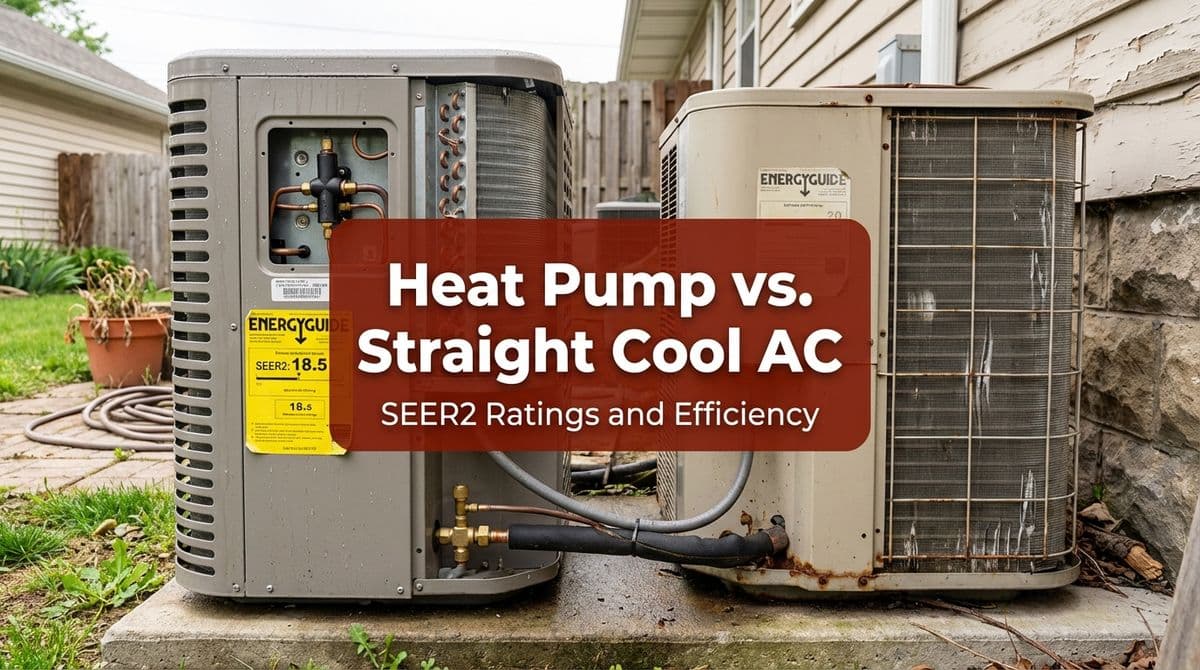
Heat Pump vs. Straight Cool AC: A Real Conversation We Just Had
We recently got a call from a customer — let’s call him David — who was trying to compare two AC estimates for a home in a warm Florida-style climate. One quote was for a four-ton heat pump with a 14.3 SEER2 rating, and the other was for a similar heat pump at 15.2 SEER2. Both companies were also using slightly different wording: “heat pump,” “straight cool,” “emergency heat,” “hanging kit,” “float switch” — the works.
David’s goal was simple: make an apples-to-apples comparison and decide if it was worth upgrading for higher efficiency. During that call, we walked him through how heat pumps and straight cool AC systems really compare in a warm climate, what SEER2 means, and when an upgrade makes sense. We thought we’d walk you through the same explanations we gave David.
Heat Pump vs. Straight Cool: What’s the Practical Difference?
In warm climates, both heat pumps and straight cool AC systems will keep your home comfortable in the summer. The big difference is how they provide heat on those cooler winter mornings.
Here’s how we explained it to David:
- Straight cool AC: Cools your home in summer. When you need heat, it relies on electric resistance heat (often called “strip heat” or “emergency heat”). That heat works like a giant toaster coil — it’s effective, but it uses a lot of electricity.
- Heat pump: Works like an AC in summer, but in cooler weather it can run in reverse to provide heat by moving heat energy from outside to inside. That process is much more efficient than resistance heat most of the time.
As we told David, in our kind of climate where it’s hot most of the year with a handful of chilly weeks, a heat pump usually means:
- Lower electric bills when you do need heat
- More even, comfortable heating
- Less strain on your electrical system compared to big heat strips running constantly
“Don’t All Systems Have Heat?” — Clearing Up a Common Confusion
On the call, David asked a smart question: “Isn’t there a heater inside the unit either way?” And the answer is yes — every system we install has a heat source. The difference is how often you rely on that backup heat.
- Heat pump systems: The heat pump does the heavy lifting. The electric heater is there as supplemental or emergency heat for very cold snaps or defrost cycles.
- Straight cool systems: The electric resistance heater is your primary heat source. Any time you want heat, you’re paying for those power-hungry heat strips.
That’s why, as we told David, for the kind of short, mild winters we see in warm climates, a heat pump typically wins on efficiency and operating cost.
SEER2: 14.3 vs. 15.2 — Does That Number Really Matter?
When David compared quotes, one system was listed as 14.3 SEER2 and the other as 15.2 SEER2. The other company didn’t really explain it, so we broke it down.
SEER2 is the newer efficiency standard that replaced the old SEER rating. It measures how efficiently your system cools over a season, under more realistic test conditions. Higher number = less electricity used for the same amount of cooling.
In plain language:
- 14.3 SEER2: Today’s minimum standard in many warm regions; considered baseline high-efficiency.
- 15.2 SEER2: A step up in efficiency — typically uses a bit less energy to deliver the same cooling.
So does 15.2 always make sense over 14.3? Not necessarily. Here’s what we told David to consider:
- Upfront cost difference: Is the higher SEER2 system significantly more expensive?
- How much you run your AC: In a very hot, high-use home, that efficiency bump can pay off faster.
- How long you’ll stay in the home: If you plan to move in a couple of years, you may not see the full savings.
We always run the numbers based on the home, the power rates, and usage patterns to see if that extra SEER2 point or so is worth the added investment.
Hidden Line Items: Hanging Kits, Float Switches, Copper Lines & More
David was also comparing line items like “hanging kit,” “hurricane straps,” “drain pan,” “float switch,” and even a note about kinked copper lines. Our estimate grouped some of these under broader descriptions, and that made him wonder if they were included.
Here’s how we clarified it for him:
- Indoor unit / outdoor unit: A “complete system” includes both — the air handler (often in the attic or closet) and the outdoor condenser.
- Hanging kit: Hardware that safely suspends an air handler in an attic. In many areas it’s required for inspection when attic units are installed or replaced.
- Hurricane straps / tie-downs: Metal straps that anchor the outdoor unit to the pad. Critical in hurricane- or storm-prone areas and often required by code.
- Drain pan & float switch: The drain pan catches condensate; the float switch (we list it as “condensate overflow protection”) shuts the system off if water backs up, helping prevent ceiling damage.
- Kinked copper refrigerant lines: If a line is kinked or damaged, it must be repaired or replaced. Running a new system on damaged lines can restrict refrigerant flow and eventually damage the compressor.
For David, we revised the written estimate to spell these out in the same language the other company used, so he could truly compare apples to apples. We’re happy to do the same for any homeowner who feels lost in contractor jargon.
When Is It Time to Upgrade — and to What?
If you’re in a warm climate and your system is aging or failing, here’s the basic guidance we shared with David:
- Your system is 10–15+ years old: Start planning an upgrade, even if it’s still running. New SEER2 systems are often much more efficient.
- You use electric heat often: A heat pump can drastically cut winter electric bills compared to straight electric strip heat.
- You’re replacing anyway: It’s usually smart to step up from the bare minimum (e.g., 14.3 SEER2) if the price jump to 15.2+ SEER2 is reasonable and you’ll be in the home a while.
- You have line issues: Ask your contractor to inspect and document the refrigerant lines. Kinks or damage should be called out and corrected in writing.
Upgrading isn’t just about the box outside; it’s about the entire system being installed to code, with the right accessories and protections for your home.
Need Help Deciding Between Options?
If you’re staring at two or three different quotes the way David was and none of them quite match, we’re always glad to walk through them with you. We can explain what each line item really means, make sure critical pieces like hanging kits, float switches, and line repairs are included, and help you decide whether a heat pump, straight cool system, or higher SEER2 upgrade is the best fit for your home and budget.
You don’t have to become an HVAC expert overnight — that’s our job. Your job is just to make an informed, comfortable decision, and we’re here to help you do exactly that.