Why Your AC Runs But Never Reaches the Set Temperature
AC running but never reaching the set temperature? Learn likely causes and simple checks to try before you call for professional air conditioning service.
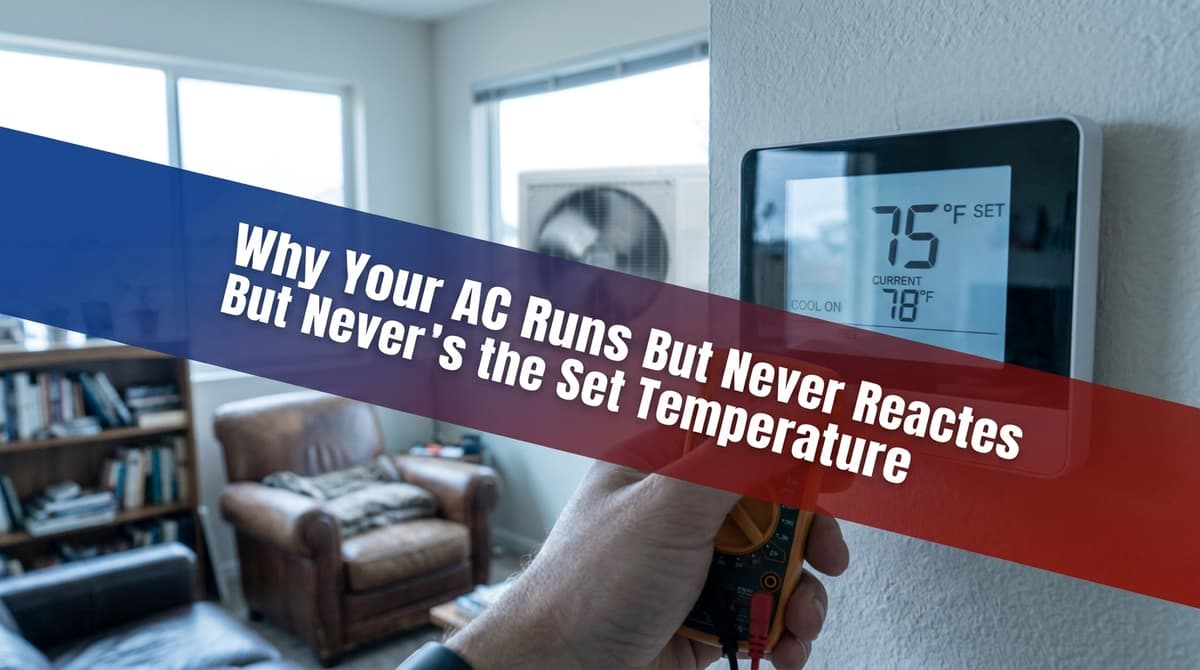
Why Your AC Runs But Never Quite Feels Cool Enough
We recently got a call from a homeowner — let’s call him Mark — who sounded pretty frustrated. He told our office that one of his systems was "working, but not working to the limit." His thermostat was set to 70, the display showed the system running, the air felt somewhat cooler, but the house just wouldn’t reach the temperature he’d set.
If that sounds familiar, you’re not alone. We hear this kind of thing a lot: the AC “seems” to be fine — it runs, it blows air — but it never quite gets comfortable, or it takes all day to get there. In Mark’s case, we scheduled a service call, but there are several things homeowners can safely check before calling us out.
First Things First: Simple Checks at the Thermostat
When we got the details on Mark’s call, the first questions we asked were about his thermostat. Often the problem isn’t the equipment outside — it starts right on the wall.
Here are a few quick things you can check on your own:
- Mode setting: Make sure the thermostat is set to Cool, not just Fan or Auto alone. Fan-only will blow room-temperature air all day.
- Temperature setting: If you’re setting the thermostat dramatically lower than the outside temperature (for example 68°F when it’s 96°F out), your system may run continuously and still struggle to hit that number.
- Thermostat location: If it’s in direct sunlight or near a hot kitchen, it can “think” the house is warmer than it really is and keep the system running.
- Low batteries (if applicable): Weak thermostat batteries can cause erratic behavior or misreadings.
In Mark’s situation, his thermostat was set correctly to cool, but the temperature just never dropped far enough. That told us the problem was likely with airflow, capacity, or the refrigerant circuit.
Airflow Issues: Filters, Vents, and Dirt
Restricted airflow is one of the most common reasons an AC runs constantly but underperforms. Before we arrive for a service visit, there are a few airflow checks we always recommend:
- Check the air filter: A clogged filter can choke your system. If it’s gray or packed with dust, replace it. In peak season, that may mean every 30 days.
- Look at supply vents: Make sure supply vents are open and not blocked by furniture, rugs, or curtains.
- Inspect return grilles: Those larger grilles where air gets pulled back to the system should be free of dust and obstructions.
When we visit a home like Mark’s, we often find a very dirty filter or closed vents in key rooms. That forces the system to work harder and longer, yet rooms still feel warm or unevenly cooled.
Outdoor Unit: Is Your Condenser Getting Enough Air?
Next, we always ask homeowners to take a quick look at the outdoor unit (the condenser). It doesn’t require any tools — just your eyes and ears.
Walk outside and check:
- Is the fan running? If the indoor blower runs but the outside fan is silent, that’s a problem that needs a technician.
- Is it blocked? Clear away grass clippings, leaves, mulch, or plants within about 2 feet of the unit so it can “breathe.”
- Coils dirty? If the metal fins are caked with dirt or lint, heat can’t escape properly, and your system loses cooling capacity.
In weather like we see here in Florida, a dirty or suffocated condenser can easily make the difference between holding at 72°F and struggling to stay under 78–80°F.
Temperature Drop Test: A Simple Homeowner Diagnostic
One easy test we often walk customers through over the phone is a basic temperature drop check. This gives a quick snapshot of how well your system is cooling the air.
- Let the system run for at least 15–20 minutes.
- Use a simple thermometer at a supply vent (where air blows out) and note the temperature.
- Then measure the temperature at a nearby return grille (where air is pulled in).
Ideally, you want about a 15–20°F difference between supply and return. If you’re only seeing a small drop (say 5–8°F), that suggests the system isn’t removing heat effectively. That can point to issues like low refrigerant, dirty coils, or a failing component — all things that call for professional service.
Other Common Reasons Your AC Can’t Reach Set Temperature
When we came out for Mark’s service call, we started with the basics above, then worked through the system. In cases like his, we frequently find:
- Low refrigerant charge: Often due to a leak. The system still runs, but it can’t move enough heat out of the home.
- Frozen evaporator coil: Restricted airflow or low refrigerant can cause the indoor coil to ice over, reducing cooling to a trickle.
- Failing capacitor or weak compressor: The outdoor unit may run, but not at full strength, so the home cools very slowly.
- Ductwork issues: Leaks in the attic or crawlspace can dump your cooled air where you don’t need it, making it seem like the AC “never catches up.”
- System undersized for the home: Especially after additions or renovations, the existing AC may simply be too small for the new load.
These are not DIY repairs, but knowing the possibilities helps you describe symptoms better and understand what we’re checking when we’re on site.
When It’s Time to Call for Service
We always encourage homeowners to check the simple items first: thermostat settings, filters, vents, and a quick look at the outdoor unit. If everything looks normal and your AC still runs constantly without reaching the set temperature, it’s time to schedule a service visit.
During a professional visit, we can:
- Measure refrigerant pressures and temperatures
- Inspect and clean coils
- Test electrical components and safety controls
- Evaluate ductwork and overall system performance
That’s exactly what we did for Mark: we confirmed his basic setup, then dug into the deeper diagnostics. Once we identified the root cause, we were able to get his system cooling properly again and explain how to watch for early warning signs in the future.
If your AC seems to run but never quite gets your home to the temperature you’ve set, start with these homeowner checks. And if things still don’t add up, we’re here to help track down the real issue and get you comfortable again.