AC Coil Problems Before Selling: Repair, Replace, or Recheck?
Getting ready to sell and facing an AC coil quote? Learn when to repair, replace, or get a second opinion—and how warranties change what you actually pay.
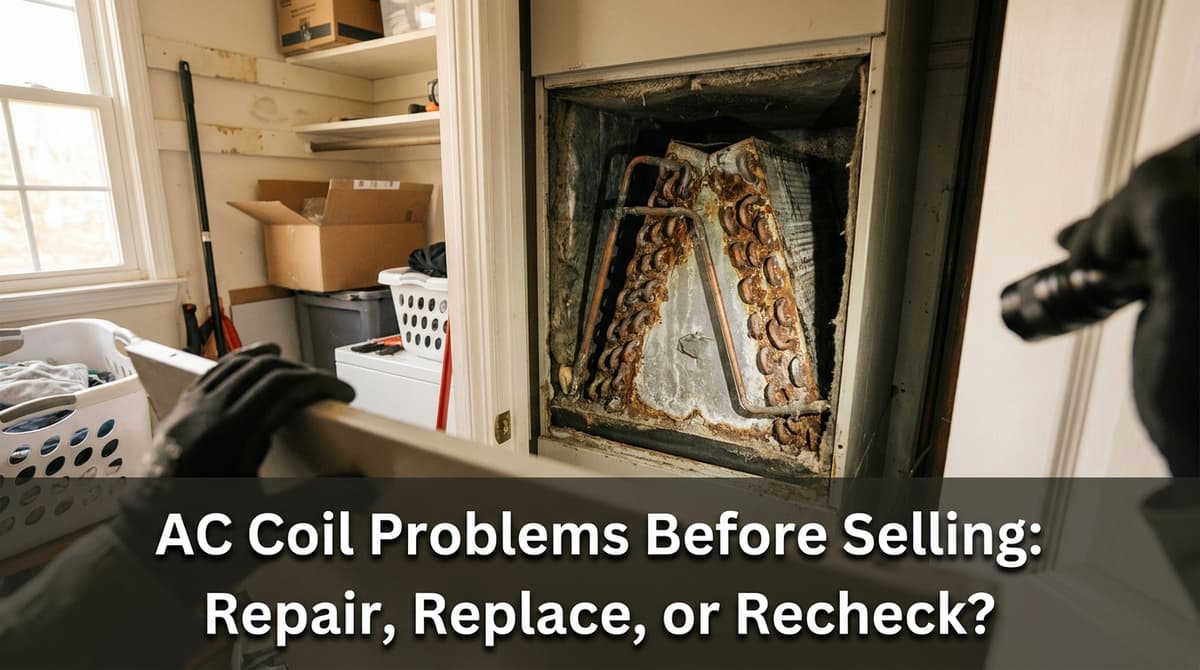
Getting an AC Coil Quote Right Before Listing Your Home
We recently got a call from a real estate agent — let’s call her Lisa — who was helping a seller get his home ready to hit the market. The air conditioner was only a few years old, installed around 2021, but it had never really kept up. Wrong tonnage outside, mismatched equipment, ongoing comfort issues — the whole situation just felt off.
Another HVAC company had come out, said the evaporator coil needed to be replaced, and quoted around $1,600–$1,700 even with a warranty part. On top of that, Lisa said the tech was rude and didn’t really explain anything. Since they were about to list the home, she wanted a second opinion before spending that kind of money.
We hear some version of Lisa’s story a lot: you’re about to sell, there’s an AC issue, and you&rsquore stuck wondering if you should repair, replace, or push back and get another quote — especially when a warranty is involved.
First Things First: What Does an AC Coil Actually Do?
In most homes, the coil that needs replacing is the evaporator coil — the cold coil inside or on top of your air handler or furnace. Here’s the simple version of what it does:
- Refrigerant flows through the coil.
- Warm air from your home blows over the coil.
- The coil absorbs heat and moisture from the air.
- Cool, dehumidified air is sent back into your home.
If that coil is leaking refrigerant, frozen over, or badly corroded, your system can struggle to keep up — which is exactly what Lisa’s seller had been dealing with.
Why Coil Problems Matter More When You’re Selling
When you’re living in the home, you feel AC issues right away. When you’re selling the home, you also have to think about how buyers and inspectors will see it.
Here’s how AC coil problems can affect a home sale:
- Home inspectors may flag low refrigerant, poor cooling, or visible ice on the coil.
- Buyers’ agents often use any AC note to negotiate credits or price reductions.
- Appraisers want to see that the home has a functioning HVAC system appropriate for the size of the house.
So even if you haven’t been living there (like Lisa’s seller, who had been out of the house for 8–10 months), it still makes sense to get the system checked out before that inspection report becomes a negotiation weapon.
When a Coil Repair Makes Sense Before You Sell
In many cases, a coil replacement is a repair, not a full system replacement. We usually recommend replacing just the coil when:
- The system is relatively new (often under 10 years old, like a 2021 unit).
- The coil is truly the only failed component and the rest of the system checks out.
- The coil is covered under a manufacturer warranty, so you only pay labor and refrigerant.
- You want the cleanest path through inspection and buyer financing.
That $1,600–$1,700 number Lisa heard is right in the normal ballpark for a warranty coil replacement, where the part itself is covered but the homeowner (or seller) pays:
- Labor to remove the old coil and install the new one
- Refrigerant (which isn’t cheap)
- Miscellaneous materials and recovery/evacuation time
That’s why we told Lisa we wanted to send our tech out, go through the entire system, and make sure the coil really was the problem before recommending that kind of repair.
When to Consider a Full AC Replacement Instead
We don’t like to jump straight to “replace everything” if you’re about to move, but sometimes it’s the smarter call.
We start leaning toward full replacement when:
- The system is older (usually 12+ years) or uses older refrigerant.
- There are multiple issues: bad coil, poor airflow, wrong tonnage (like Lisa’s seller had), or mismatched equipment.
- The inside and outside units are different ages or brands, making future problems more likely.
- You’re expecting tough inspections or buyers using FHA/VA financing that scrutinizes HVAC more closely.
In those cases, sellers sometimes choose to install a new system and highlight it in the listing as a selling point: “New HVAC installed in 2024 with transferable warranty.” That can attract stronger offers and reduce back-and-forth haggling.
When a Second Opinion Is Absolutely Worth It
Lisa did the right thing by calling us for another look. If we were in your shoes, we’d get another quote when:
- The tech can’t clearly explain why the coil needs to be replaced.
- No one checks whether the coil is under warranty.
- The estimate seems high but lacks a breakdown (parts vs. labor vs. refrigerant).
- You already know there were installation mistakes (like wrong tonnage) that might be the real root problem.
On Lisa’s call, we scheduled a same-day visit so our tech could:
- Go through the entire system, not just the coil.
- Verify system size and match between indoor and outdoor units.
- Check warranty coverage with the manufacturer.
- Give a written estimate and realistic timeline so the sale wouldn’t be delayed.
How AC Warranties Affect Coil Replacement Cost
Many homeowners hear “it’s under warranty” and assume they shouldn’t have to pay anything. Unfortunately, that’s rarely how HVAC warranties work.
Most manufacturer warranties on coils cover:
- The part itself (the new coil)
But they do not cover:
- Labor to diagnose, remove, and install the coil
- Refrigerant and recovery/disposal of the old charge
- Trip charges or after-hours fees
That’s how you end up with a “warranty” coil still costing $1,600–$1,700, like in Lisa’s situation. We always check warranty status first, then lay out exactly what’s covered and what isn’t so sellers know what they’re walking into.
How Buyers and Inspectors Look at Your AC
From what we see on the service side, here’s how AC issues tend to play out during a sale:
- Inspector notes an issue (weak cooling, short cycling, coil icing, or mismatched tonnage).
- The buyer asks for repair, replacement, or a credit at closing.
- The seller either fixes the issue, offers money off, or provides documentation showing recent professional work.
Having a clear invoice for a coil repair or a full replacement can help keep the deal moving and reduce how much buyers can reasonably push for later.
Common Questions Sellers Ask Us About AC Coils
Can we just offer a home warranty instead of replacing the coil?
Sometimes. A one-year home warranty can give buyers peace of mind, but:
- Many plans treat pre-existing issues differently.
- Buyers might still ask for upfront repairs if the inspector flags something major.
- A visibly leaking coil or badly performing system may still hurt your negotiating power.
We usually suggest getting a professional diagnosis first, then deciding whether a home warranty plus a smaller repair makes sense.
Should we disclose past AC issues to buyers?
We aren’t attorneys, but as contractors, we can say this: honesty helps deals close. Most states require disclosing known, material issues. Having a recent inspection and repair from a reputable company can actually help you:
- Show that you took issues seriously.
- Provide buyers with documentation of what was done.
- Avoid last-minute surprises that blow up the contract.
Is it worth fixing the AC if we’re not living there?
In Lisa’s case, the seller hadn’t lived in the house for 8–10 months, but the AC still mattered. If your system is new enough and fixable under warranty, getting it handled before listing:
- Makes showings more comfortable.
- Reduces scary inspection notes.
- Helps your home compete with other listings in your price range.
Our Best Advice If You’re Staring at a Coil Quote
If you’re about to sell and someone has told you that your AC coil needs to be replaced, we recommend:
- Get the system fully diagnosed, not just the coil.
- Ask about warranty coverage for the part and how that affects the price.
- Request a written estimate with labor, materials, and refrigerant clearly listed.
- Consider a second opinion if the price feels high or the explanation feels thin.
That’s exactly what we did for Lisa: schedule quickly, verify the real problem, check the warranty, and then give options that made sense with her listing timeline. If you’re in a similar spot, we’re always happy to walk you through the same process so you can sell with fewer surprises and a lot more confidence.